

Beginning May 1, 2026, SCTR proudly welcomes Samuel Joseph Crowley, Ph.D. and Jessica English, M.D., MSCR as the newest members of the SCTR K12 Mentored Career Development Program. They join current scholar Russell Spencer-Smith, Ph.D., continuing the program’s tradition of supporting exceptional early-career investigators.
The K12 Program is led by Program Directors Aimee McRae-Clark, Pharm.D., BCPP and Susan Dorman, M.D. with Program Administrator Diana Lee-Chavarria guiding day-to-day operations.
The NIH-funded SCTR K12 provides 75% protected research time, structured mentorship, and a supportive training environment designed to help promising investigators launch independent careers in translational science. The program emphasizes moving discoveries from the lab, clinic, and community into real world solutions that improve health across South Carolina and beyond.
What K12 Scholars Receive
Scholars appointed to the K12 program benefit from:
• Didactic training to strengthen scientific and professional skills
• Dedicated mentorship to support the development of a competitive extramural grant application
• Professional development opportunities that prepare scholars for independent research careers
• Annual research funding and salary support to enable protected time for career growth
Every new cohort brings fresh perspectives and energy to the K12 program. As part of our tradition, we invited Drs. Crowley and English to answer a few questions so our community can get to know them better. Enjoy their insights below, and please join us in giving them a warm welcome to the SCTR K12 team.
New Scholar Q&A
Samuel Joseph Crowley, Ph.D.
Department of Neurology, Division of Clinical Neuropsychology
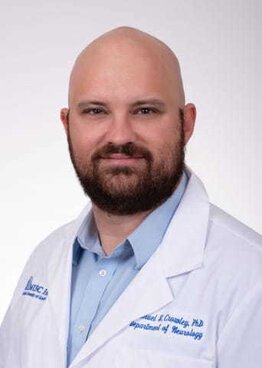
Sam Crowley, Ph.D.
Specialties: Movement Disorders, Neuromodulation, Neuroimaging
Sam J Crowley earned his doctorate degree in clinical and health psychology from the University of Florida. He completed his predoctoral internship at Emory University and his postdoctoral fellowship at the VA Ann Arbor/Michigan Medicine consortium. He provides neuropsychological evaluations for a variety of patients, with a focus on movement disorders. His research interests include biological and cognitive predictors of decline in Lewy body disease, as well as nonpharmacological interventions to improve cognitive function.
What is something that your mentor or other K scholars would be surprised to know about you?
I drove commercial buses and London double-decker buses as a job in college. It’s been a while since I’ve driven them, but I like to think if I was in a zombie apocalypse scenario I’d be able to figure it out.
What drew you to the K12 program?
Though I have been involved in research in some capacity since I started graduate school, I have little experience with grant writing specifically, and I was excited by the idea of developing those skills in a structured environment with other similarly experienced professionals. I’m also excited to be exposed to exciting research being done by the other scholars that is outside my area of interest/expertise, as I think it will make me a stronger scientist.
How does the K12 fit into your prospective career trajectory?
I am interested in ultimately developing nonpharmacological interventions for cognitive impairment in Parkinson’s Disease (PD) and related disorders. Though I have plenty of experience in cognition in PD and some experience with neuromodulation, I still have many areas that I need to develop to become an effective clinical researcher. This K12 will give me important experience in running a neuromodulation study, executing a clinical trial, and developing a novel outcome measure.
I’m very excited to meet everyone and start working on my project!
Jessica English, M.D., MSCR
Department of Medicine, Division of Rheumatology
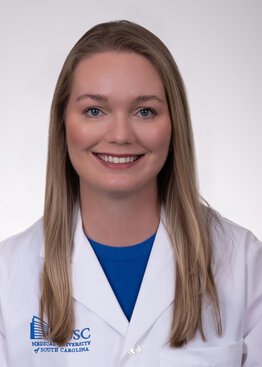
Jessica English, M.D., MSCR
Dr. Jessica English is an adult rheumatologist with clinical and research interests in reproductive health in rheumatic diseases, with a focus on systemic lupus erythematosus. She is dedicated to providing comprehensive care to patients throughout their reproductive health journeys and to advancing research aimed at improving pregnancy outcomes in women with lupus.
Dr. English has received multiple research awards and has presented her work at national and international conferences. She is committed to medical education and teaches within the MUSC College of Medicine, including lectures for Internal Medicine residents. She also participates in community patient education events focused on lupus and reproductive health.
Dr. English earned her MD from East Tennessee State University Quillen College of Medicine and completed her internal medicine residency and adult rheumatology fellowship at MUSC. She served as chief resident in internal medicine and chief fellow in rheumatology and earned a Master of Science in Clinical Research with a focus on pregnancy outcomes in lupus.
What is something that your mentor or other K scholars would be surprised to know about you?
I played division I college golf.
What drew you to the K program?
The K12 program provides opportunities for early career investigators to not only have funded time to complete research but even more importantly the structure, mentorship, and guidance from MUSC faculty to improve skills, utilize local resources, and receive feedback on projects.
How does the K12 fit into your prospective career trajectory?
The K12 allows me to continue building research skills and receive feedback on a potential NIH K23 award, bringing me closer to eventual independent R01 research funding (which is an ultimate goal of mine).
I greatly appreciate this opportunity. Meeting faculty and other awardees from MUSC, learning about the research support and resources at our institution, and receiving the necessary structure/feedback for an early investigator is truly invaluable.
Current Scholar

Russell Spencer-Smith, Ph.D.
I received my Ph.D. in Molecular Pharmacology from the University of Illinois College of Medicine in 2017. I then completed my postdoctoral training at the National Cancer Institute, before accepting a faculty position at MUSC. The RAS-MAPK pathway is hyperactivated in 30 to 40% of human cancers; however, there remains a dearth of effective drugs that target this pathway. The primary objective of our lab is to uncover new vulnerabilities in RAS-MAPK signaling through the study of rare disease-associated mutations therein.
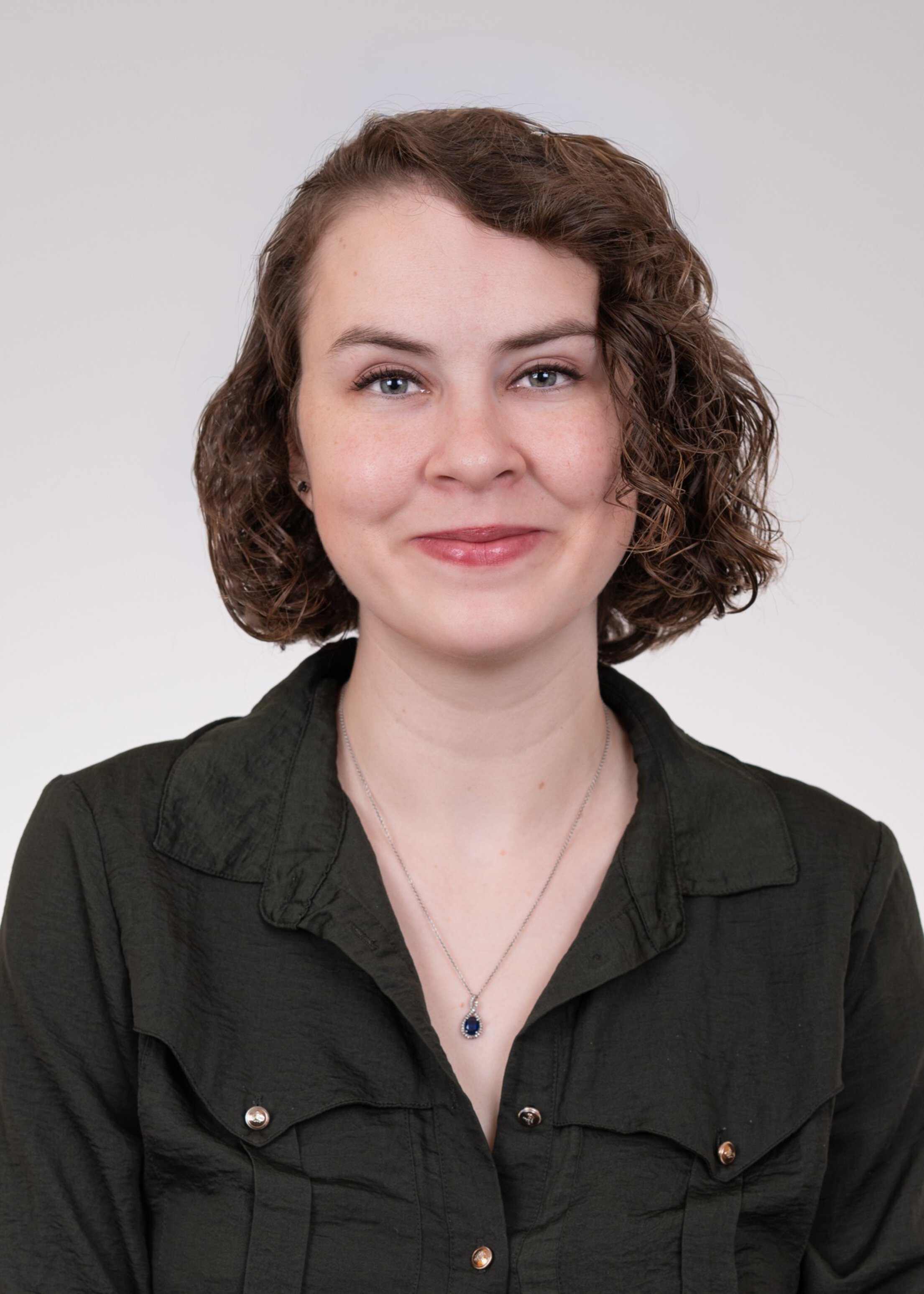
Sophia Barry Gordon
Sophia Barry Gordon is the science writing and communications program coordinator at the South Carolina Clinical & Translational Research (SCTR) Institute. She holds a Master of Science degree from New York University and is currently a Ph.D. candidate at the University of Birmingham (UK).