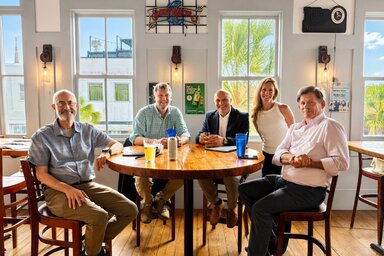


A new cohort of researchers at MUSC is taking on some of the biggest challenges in moving science from discovery to real-world impact. The 2026–2027 South Carolina Clinical & Translational Research (SCTR) Institute Translational Science Challenge (TSC) awardees are leading projects designed to break down barriers that slow research and limit its reach. This year’s TSC awardees span four MUSC colleges—the College of Health Professions, College of Dental Medicine, College of Nursing, and College of Medicine—underscoring the broad reach of this funding mechanism in advancing translational science research across the university. Their work spans the full spectrum of health research, from early discovery to community-based care, with a shared goal of making research more effective, accessible, and meaningful for patients and communities.
To understand the importance of these projects, it helps to distinguish between translational research and translational science. Translational research focuses on applying findings from the lab or clinic to improve patient care. Translational science goes a step further by studying the process itself—identifying common obstacles and developing solutions that can improve how research is conducted across many fields. By focusing on these broader challenges, translational science aims to speed up the path from discovery to better health outcomes.
“Roadblocks in clinical and translational science are numerous and exist all across the translational spectrum, from early-stage discovery through getting effective interventions into real-world practice and communities,” says Jennifer Dahne, Ph.D., Director of the SCTR Pilots and Element E programs. “Through SCTR’s Translational Science Challenge pilot mechanism, we are supporting innovative projects that address barriers to research efficiency, rigor, and impact. Each of this year’s funded projects is tackling a pressing challenge that, if successfully resolved, could help accelerate the translation of research into interventions that improve health in South Carolina and beyond.”
From strengthening research infrastructure to improving care delivery, these projects reflect the power of translational science in action. Below, the 2026–2027 TSC awardees share, in their own words, what they are working on and why it matters.
Enhancing Capacity for Conducting Robust Qualitative Research Support
Jillian Harvey, Ph.D., MPH
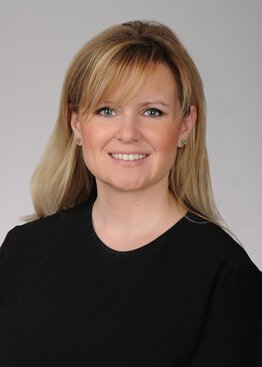
Jillian B. Harvey, Ph.D., MPH
For a lay audience, can you describe your project in a sentence or two?
This project seeks to grow our translational research capacity by training Research Coordination and Management Specialists in qualitative methods. This will expand their role to include qualitative research services and better support MUSC investigators through interviews, focus groups, and other qualitative methods.
What led you to want to study this topic?
SCTR has seen a sharp increase in requests for qualitative research support, especially from community-engaged, implementation and dissemination science, and program evaluation studies, but there are not enough trained qualitative researchers to meet that demand. We saw an opportunity to strengthen institutional capacity by building these skills within our research workforce.
What excites you most about being selected for the Translational Science Challenge Award and what does it mean to you?
The award provides a chance to pilot a practical, workforce-focused solution to a real translational barrier. As part of the training, we will also conduct a small qualitative demonstration project. The goal of the demonstration project is to learn more about research priorities, needs, and challenges related to clinical trials within the Regional Health Network (RHN). We are excited to work with the newly trained qualitative staff to learn more about the research goals at the RHNs.
What are your ultimate hopes for this project? What impact do you hope it generates?
Our hope is to create a sustainable, scalable model for high-quality qualitative research support that benefits investigators across the translational spectrum. Ultimately, this work should lead to stronger, more inclusive research, better-informed implementation strategies, and increased clinical research participation across regional sites. This project is intentionally designed to generate value beyond a single study. If successful, it can serve as a replicable model for other Clinical and Translational Science Award (CTSA) programs, particularly those with limited access to qualitative faculty expertise, while simultaneously producing actionable insights for regional health systems and communities.
INCiTE (Initiative for Clinical Trial Education - Phase II)
Joni Nelson, Ph.D.
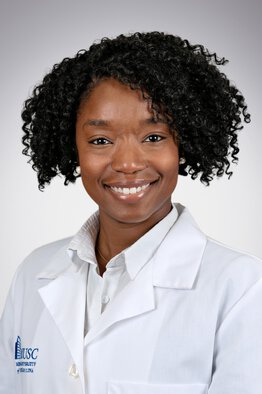
Joni Nelson, Ph.D.
Joni Nelson, Ph.D., has dual appointments in the Department of Public Health Sciences in the College of Medicine and the Department of Biomedical & Community Health Sciences in the James B. Edwards College of Dental Medicine, where she also serves as chief of the Division of Population Oral Health. As assistant director of OWD, she works to promote workforce development and advance organizational culture at Hollings Cancer Center.
For a lay audience, can you describe your project in a sentence or two?
Our project, INCiTE, focuses on building a trained, community-based workforce so clinical trials are easier to access and better represent the people they’re meant to help. The introductory certificate course teaches technical college students the basics of clinical research, how trials are carried out, and how to support and keep participants engaged so studies lead to real-world results.
What led you to want to study this topic?
I’ve seen that who takes part in clinical research, both as participants and as part of the workforce, shapes the value and impact of the findings. Communities most affected by disease are often not fully represented in studies. I became interested in this work because I realized a key barrier isn’t only awareness or access, but also the need for a trained local workforce that can meaningfully engage.
What excites you most about being selected for the Translational Science Challenge Award and what does it mean to you?
This award is exciting because it recognizes that training people for research jobs is key to turning discoveries into real-world impact, something that’s often been overlooked. It will help us grow this work and test a model that could expand beyond South Carolina. Personally, it’s meaningful to see this idea supported, especially because of its potential to make a lasting difference in how research reaches people.
What are your ultimate hopes for this project? What impact do you hope it generates?
I hope INCiTE creates a steady pathway of interested trainees to be well-trained, community-connected research professionals who can build trust, increase participation in clinical trials, and help ensure discoveries benefit more people. Over time, I hope this model can grow and be used more widely to improve how research translates into real-world health.
Building Health Services Research Capacity through Data Science Partnerships
Tammy L. Loucks, MPH, DrPH
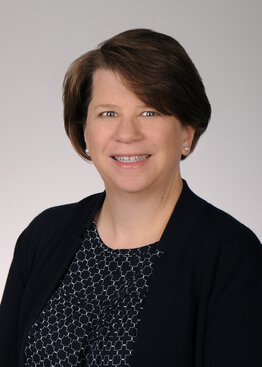
Tammy Loucks, MPH., DrPH
Science Development Officer 843-792-0591 louckst@musc.edu
For a lay audience, can you describe your project in a sentence or two?
This project helps investigators better use existing electronic health record data by pairing them with trained data scientists and mentors to study how care is delivered in the real world. By building these teams and skills, the program aims to support new research that will yield practical insights that improves patient care, reduces costs, and strengthens our ability to tackle major health problems in South Carolina.
What led you to want to study this topic?
This is important because there are a growing number of large data resources available including patient level data that can help to quickly reveal what is an isn’t working in real-world care, but the potential of these resources are under-realized. Our project will address this challenge through skill development and creating an environment to foster collaboration and innovation.
What excites you most about being selected for the Translational Science Challenge Award and what does it mean to you?
This award will enable an essential step in Translational Science- delivering better treatments to those who need them with greater efficiency. This award will help build an important knowledge resource in data sciences, one essential to conducting research in real-world settings.
What are your ultimate hopes for this project? What impact do you hope it generates?
I am looking forward to seeing experts from different fields to come together to pursue research that will help to address important health questions impacting our patients. Our model if successful could lead to new opportunities to engage in research for MUSC investigators and help other institutions by providing an approach that could be adapted to fit their needs.
Accelerating Translation to Practice: Multi-Level Interventions for Efficient Care Coordination Across Medical Specialties
Michelle Mollica, Ph.D., MPH, RN, OCN, FAAN
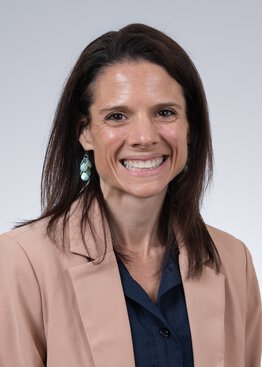
Michelle Mollica, Ph.D., MPH, RN, OCN, FAAN
Dr. Mollica recently joined the Medical University of South Carolina (MUSC) as Associate Professor with the College of Nursing and Director of Survivorship Care and Delivery at Hollings Cancer Center and the Survivorship and Cancer Outcomes Research (SCOR) Initiative.
Dr. Mollica previously served as Deputy Director of the National Cancer Institute’s Office of Cancer Survivorship within the National Institutes of Health, where she was responsible for leading strategic research efforts focused on improving outcomes and care for people impacted by cancer. Dr. Mollica’s research focuses on the intersection of survivorship and health care delivery, including models of survivorship care, integration of oncology and primary care providers, transitions in care and the unique needs of specific survivor populations, including people living with advanced and metastatic cancers.
Dr. Mollica led the development of the National Standards for Cancer Survivorship Care, which provides a framework to health systems with essential policy, process and evaluation components to assess and improve the quality of survivorship care. The survivorship standards are currently being piloted within health systems nationally, with the ultimate goal of delivering comprehensive care for every cancer survivor.
Dr. Mollica earned her Ph.D. from MUSC, MPH from the University at Buffalo, MS from Daemen University and BSN from Columbia University.
For a lay audience, can you describe your project in a sentence or two?
Our project, Accelerating Translation to Practice: Multi-Level Interventions for Efficient Care Coordination Across Medical Specialties, focuses on improving how healthcare teams work together to care for people with complex health needs. Using cancer survivorship as a first use-case, we are conducting a mixed methods study of key stakeholders (patients, primary care clinicians, and oncology providers) and then will use these findings to develop a blueprint of an intervention, Advancing Coordination for Translation (ACT), that uses practical, technology supported approaches to help primary care clinicians and specialists clearly define roles, communicate effectively, and deliver more coordinated care.
What led you to want to study this topic?
This work is grounded in my professional experiences as both an oncology nurse and a cancer survivorship researcher. As a nurse, I routinely saw patients struggle to navigate care across multiple providers, particularly during and after cancer treatment, when responsibility for components of care is often unclear. Later, during my time at the National Cancer Institute in the Office of Cancer Survivorship, I focused on survivorship care delivery and health systems research and saw that even well-established evidence and clinical guidelines often fail to reach patients due to poor coordination across care teams. These experiences highlighted a persistent gap between scientific discovery and how care is delivered in everyday practice, motivating the development of ACT.
What excites you most about being selected for the Translational Science Challenge Award and what does it mean to you?
The Translational Science Challenge Pilot Award is especially meaningful because it supports research that directly addresses how science moves from evidence to implementation. I am particularly excited to work alongside a stellar multidisciplinary team whose combined expertise spans oncology, primary care, behavioral science, implementation science, and health informatics.
This award allows our team to focus not only on identifying problems in care delivery, but on designing practical, real world solutions with patients and clinicians. For me, it brings together my background in oncology nursing, leadership in cancer survivorship care delivery at NCI, and current academic research to advance meaningful, system level change.
What are your ultimate hopes for this project? What impact do you hope it generates?
Our ultimate goal is to develop a scalable and adaptable intervention blueprint for improving care coordination across specialties and health systems. In the short term, we aim to improve clarity, communication, and care experiences for cancer survivors. In the long term, we hope ACT helps health systems more efficiently translate evidence based care into routine practice, reducing fragmented care, unnecessary utilization, and patient burden, while improving outcomes for people living with complex conditions. A key strength of this study is its stakeholder driven approach. By engaging cancer survivors, primary care clinicians, specialists, and health system administrators throughout the process, this project is intentionally designed to produce solutions that are evidence based, feasible, and sustainable. Ultimately, our team is committed to improving care delivery in ways that matter to both patients and the clinicians who care for them.
Please see the table below for important dates related to the next Translational Science Challenge cycle:
| 2026 | Key Date |
|
RFA Release |
August 7, 2026 |
|
1-page Concept Proposals Due (by 5:00 pm) |
October 10, 2026 |
|
Full Applications Due |
January 8, 2027 |
|
Recommendation for Funding Notification |
February 5, 2027 |
|
Earliest Possible Start |
April 1, 2027 |
To learn more about the Translational Science Challenge and SCTR’s Pilot Grant Program, visit SCTR's Pilot Funding page or email Sydney Bollinger to schedule a consult to discuss ideas for future Translational Science Challenge concepts.
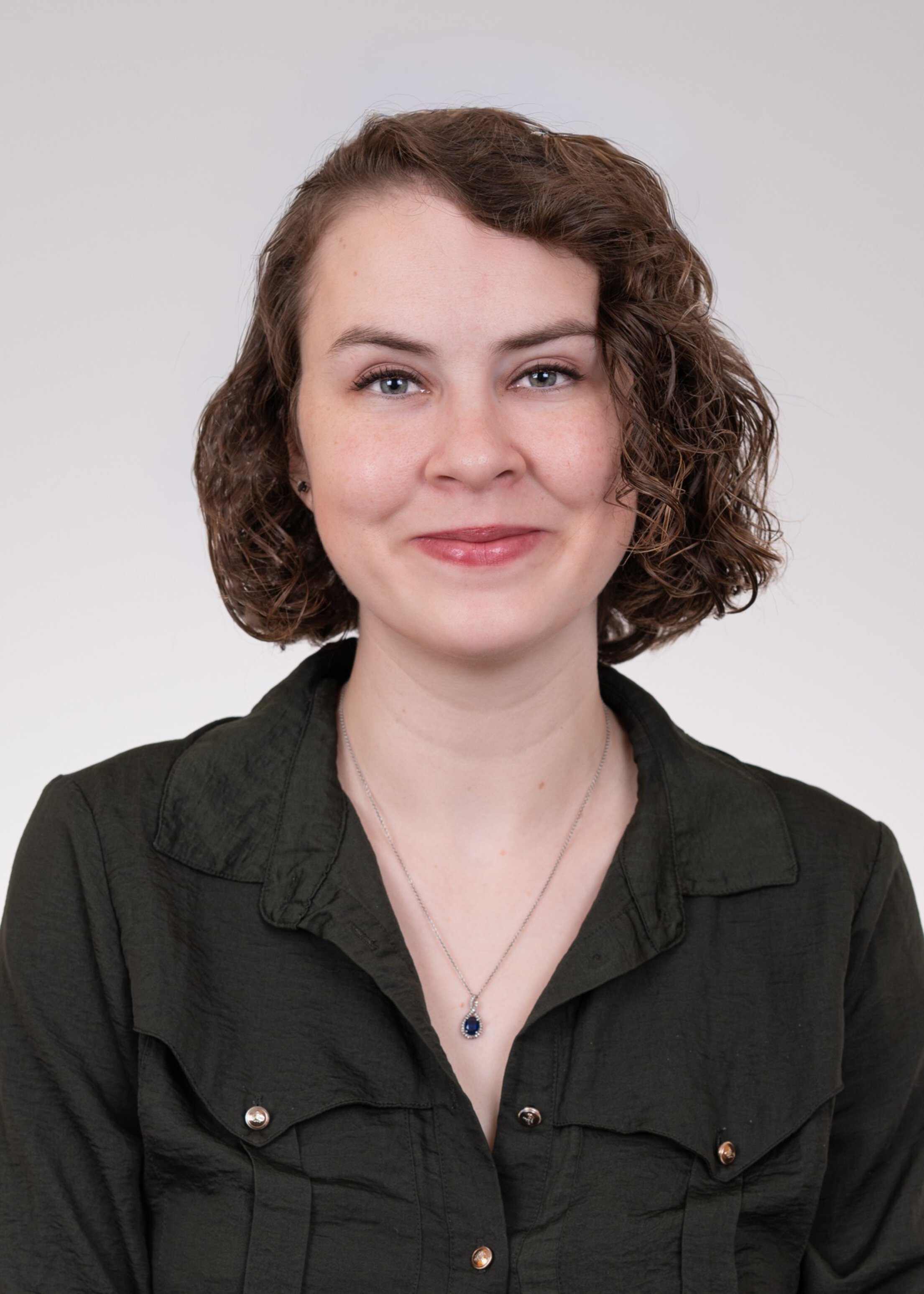
Sophia Barry Gordon
Sophia Barry Gordon is the science writing and communications program coordinator at the South Carolina Clinical & Translational Research (SCTR) Institute. She holds a Master of Science degree from New York University and is currently a Ph.D. candidate at the University of Birmingham (UK).