

Researchers from the Medical University of South Carolina and elsewhere have linked loneliness in patients with chronic leg and foot wounds to increased expression of genes that are related to inflammation. These pro-inflammatory genes turn on during injury or illness but need to be turned off during healing. If they remain on, wounds do not heal properly. This study focused on patients who live with wounds that remain open for more than four weeks.
The findings, recently published in Advances in Skin & Wound Care, contribute to a vital area of medical research: the impact of loneliness on wound care.
Teresa Kelechi, Ph.D., associate dean for research at the MUSC College of Nursing and lead author of the article, observed this impact firsthand in her wound clinic and also during a study of chronic leg and foot ulcers. She noticed that some patients were healing slower.
“They had clean wounds. They had good nutrition. They had adequate exposure to natural light. They had all the things that would make people heal and be healthy,” said Kelechi. “However, there was something missing that we could never put our finger on.”
She and her collaborator, Laurie Theeke, Ph.D., at George Washington University, began to strongly suspect that loneliness was that missing factor.
"They had all the things that would make people heal and be healthy. However, there was something missing that we could never put our finger on.
Theeke has been exploring the links between loneliness and health for more than 15 years.
“When people are lonely, they are in a fight-or-flight response,” Theeke said. “They have a diminished immune state, and they are less likely to heal than someone who is not in that state.”
Kelechi and Theeke set out to explore whether there is a link between loneliness and leg and foot wounds that are slow to heal. They were interested in learning whether loneliness plays a role in keeping inflammatory genes turned on, preventing proper healing.
They partnered with Steve Cole, Ph.D., a professor at the University of California, Los Angeles, and a co-author of the article. Cole has focused much of his career on investigating a set of genes influenced by social dynamics like loneliness.
The study of the connection between social interactions, genes and illness is called social genomics.
“Social genomics describes how our social lives influence how our genes behave in our body. How social experiences, in this case, loneliness, isolation, belonging, can change how our genes are expressed or turned on or off,” said Theeke.
In their study, Kelechi and Theeke analyzed a set of genes defined by the conserved transcriptional response to adversity (CTRA), a biological pattern first described by Cole, in which certain genes are turned on or off in response to adverse psychological stressors.
The selected set of genes was also related to inflammation. This selection drew on Theeke’s expertise in gene expression changes linked to loneliness and Kelechi’s extensive experience in wound care, including her research on how chronic inflammation impairs healing in patients with leg and foot wounds.
To explore the role of loneliness in chronic leg and foot wounds, the researchers divided participants into high-loneliness (L+) or low-loneliness (L-) groups using the 20-item UCLA Loneliness Scale. This scale measures perceived loneliness through statements such as “I feel isolated from others,” with respondents indicating how often they experience each feeling, from “never” to “often.”
Kelechi emphasized that loneliness is not the same as social isolation, which is defined by a person’s number of social connections. In contrast, loneliness reflects the perceived quality of those relationships.
Blood samples were collected from each member of the L- and L+ groups. These samples were used to measure pro-inflammatory gene expression.
The researchers found that the L+ group had significantly higher expression of pro-inflammatory genes, which may delay healing. Specifically, 18 genes formed a distinct profile characterizing the high-loneliness group – adding to a growing body of evidence that perceived feelings of loneliness can influence physical health.
While future research can use this data to explore additional effects of loneliness on health outcomes, Kelechi and Theeke are more interested in improving health outcomes for this population now.
They have submitted a grant for a randomized trial in which people at wound clinics would receive individual cognitive behavioral therapy (CBT) to address loneliness. The researchers’ plan would be to measure gene expression before and after the therapy.
“We can change gene expression in as little as three months,” Theeke explained. “Maybe we can turn delays in healing around if we can address the issue that’s causing the increased expression of certain genes.”
"The next frontier in wound care will not only be dressings or advanced treatments. It's also going to include a need for social connection.
Kelechi and Theeke are optimistic about the future of chronic wound care.
“Chronic wounds and loneliness can reinforce each other, and loneliness may be linked to a measurable pro-inflammatory gene expression profile,” said Kelechi. “This suggests that wound care should include psychosocial assessment and support, not only dressings and procedures.”
Theeke agreed with her colleague. “The next frontier in wound care will not only be dressings or advanced treatments,” she said. “It’s also going to include a need for social connection.”
Reference:
Kelechi TJ, Cole SW, Theeke L, et al. Use of a Social Genomics Model to Explore Loneliness and Systemic Inflammation in an Adult Population With Chronic Lower Extremity Ulcers. Adv Skin Wound Care. 2026;39(3):159-167. doi:10.1097/ASW.0000000000000410
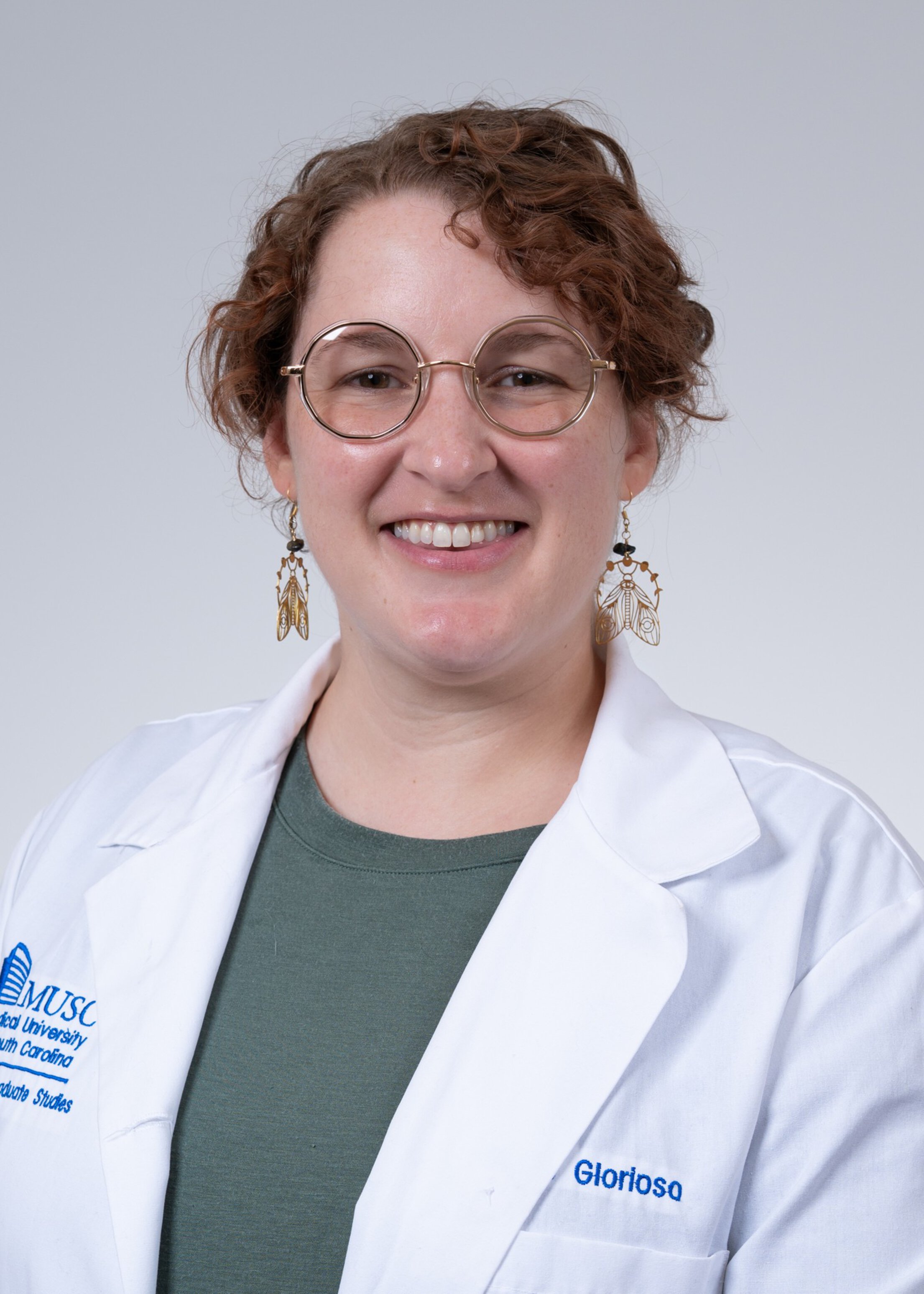
Kathryn Glorioso
Graduate Research Assistant
Kathryn Glorioso is a Ph.D. candidate in the Molecular and Cellular Biology and Pathology Program at the Medical University of South Carolina (MUSC), co-mentored by Drs. Joshua H. Lipschutz and Oleg Palygin. Her research focuses on renal physiology, with particular emphasis on renin-angiotensin system-mediated calcium and nitric oxide signaling in glomerular cells, pharmacological modulation of angiotensin receptors, and redox regulation in kidney disease. Kathryn has developed expertise in isolating human and rodent glomeruli, primary cell culture, confocal calcium imaging, and functional ex vivo assessment of intracellular signaling in renal tissues. Kathryn has received numerous national and international awards, including the North American Three Minute Thesis (3MT) People's Choice Champion, the ASN Kidney STARS and TREKS Travel Awards, and the O'Brien Kidney Resource Alliance Travel Award. She is committed to pursuing an academic career focused on translational nephrology, integrating mechanistic studies with human kidney research to develop innovative therapies for glomerular diseases.
Awards:
2026 George M. O’Brien Kidney Resource Alliance (OKRA) travel award
2026 Participation in Kidney TREKS (Tutored Research and Education for Kidney Scholars) Program, American Society of Nephrology (ASN)
2026 Outstanding Poster Presentation Award, Graduate Student Section, Department of Medicine Research Day, Medical University of South Carolina2026
3rd Place, Lowcountry Speaking Invitational, The Citadel, Charleston, SC
2025 People’s Choice Winner of the Three Minute Thesis (3MT®) Showcase and Roundtable at the annual meeting of Council of Graduate Schools' (CGS) 65th Annual Meeting in Washington, DC